BIO-INTEGRATED TRANSIT SHELTER
Material-driven public shelter addressing heat and air quality
Photography by Julia Brière unless otherwise stated
2020 | Academic | Independent Project
COLLABORATORS Ardita Shaqiri | 3D rendering
Los Angeles, my home city, faces rising temperatures and severe air pollution, with 1,900 of 7,900 bus stops lacking shaded structures. Commuters experience direct exposure to heat and poor air quality, revealing a gap in how everyday urban infrastructures support human well-being. This project reframes the bus stop as a site for material experimentation and environmental performance. Instead of treating it as a static shelter, the proposal explores how living systems can be integrated into architectural components to create adaptive, multifunctional structures.
ROLE Concept Development, Site Analysis, System Design, Algae Integration, Architectural Design
Algae is embedded into the facade as an active material that absorbs CO₂, filters air, and makes the metabolic process visible. The result is a prototype operating at the intersection of material behavior, interaction, and ecological infrastructure. The shelter offers shade and cleaner air while giving the public an interface to a living system, positioning the bus stop as both a civic utility and an active environmental device.
01 SITE ANALYSIS
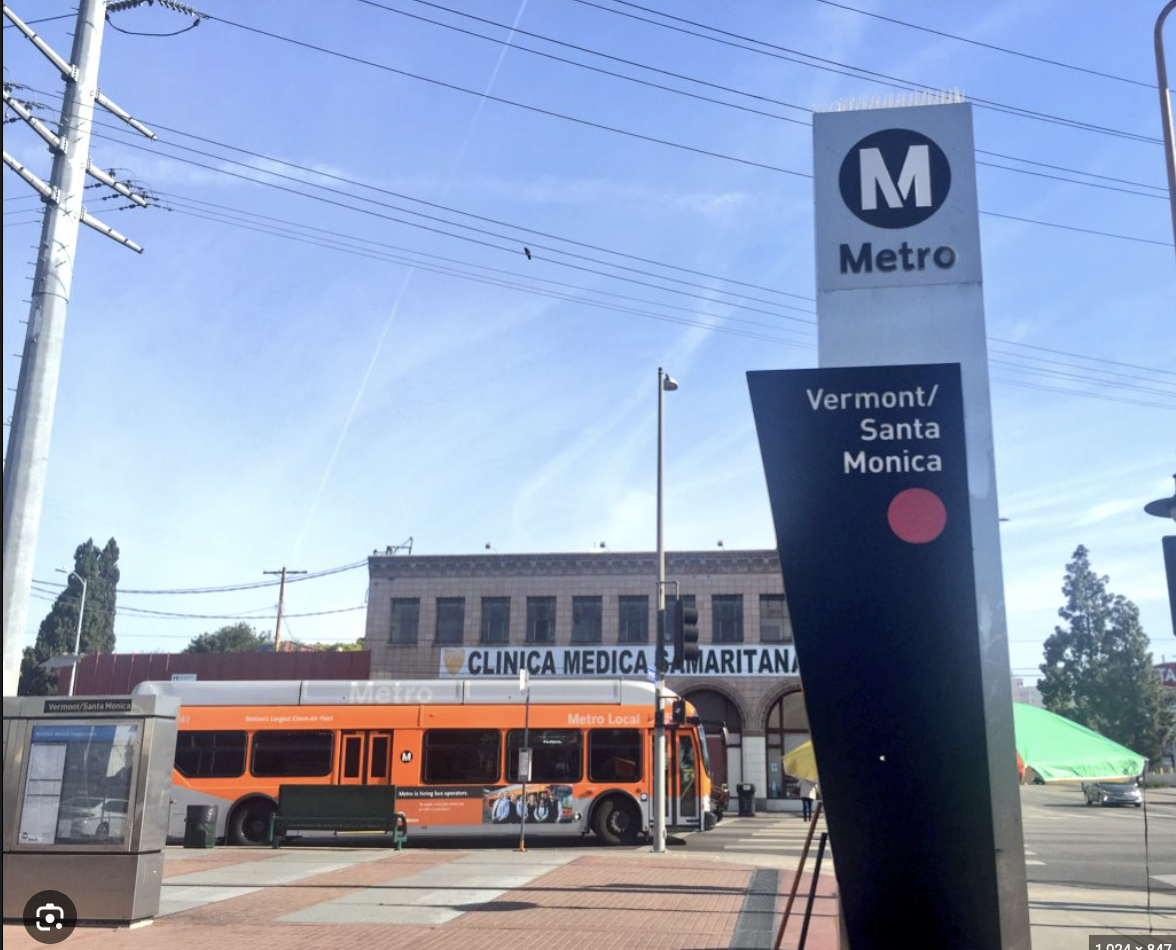
Existing Conditions High-traffic stop with no shade. Commuters exposed to direct sun and vehicle emissions.
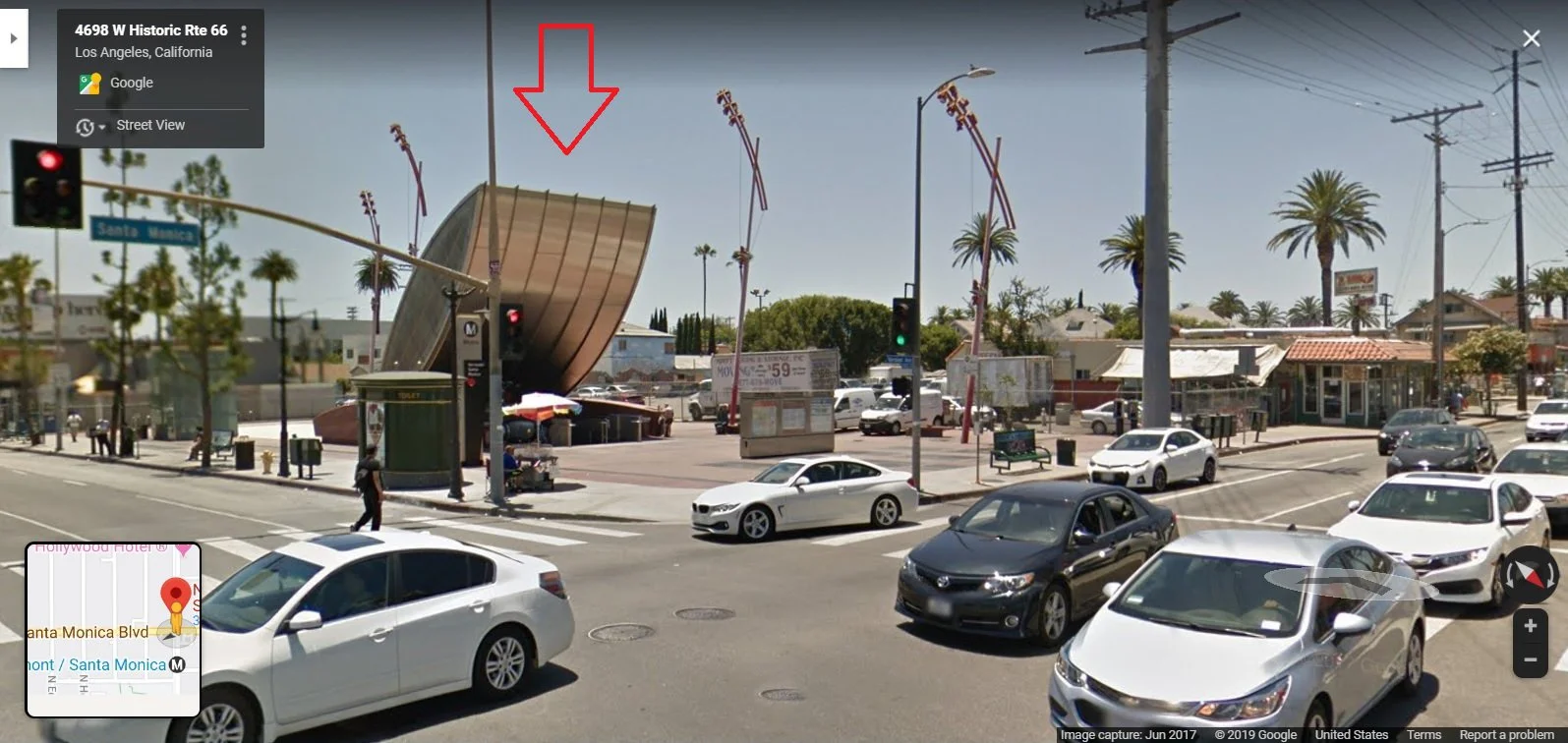
Bus Stop: Santa Monica at Vermont, 704 & 4 lines A major transfer point with consistent foot traffic and long wait times.
Shade inequity and environmental exposure
Los Angeles faces extreme heat and poor air quality. Many high-traffic bus stops lack shaded structures, leaving commuters exposed to heat and pollution during long waiting times. The Santa Monica and Vermont stop is one of these gaps in the network and serves as the test site for this project.
Site Conditions
The site sits at a busy transit hub with minimal shade. Limited tree canopy, reflective surfaces, and nearby traffic corridors intensify heat and pollution, creating unsafe conditions for daily commuters.
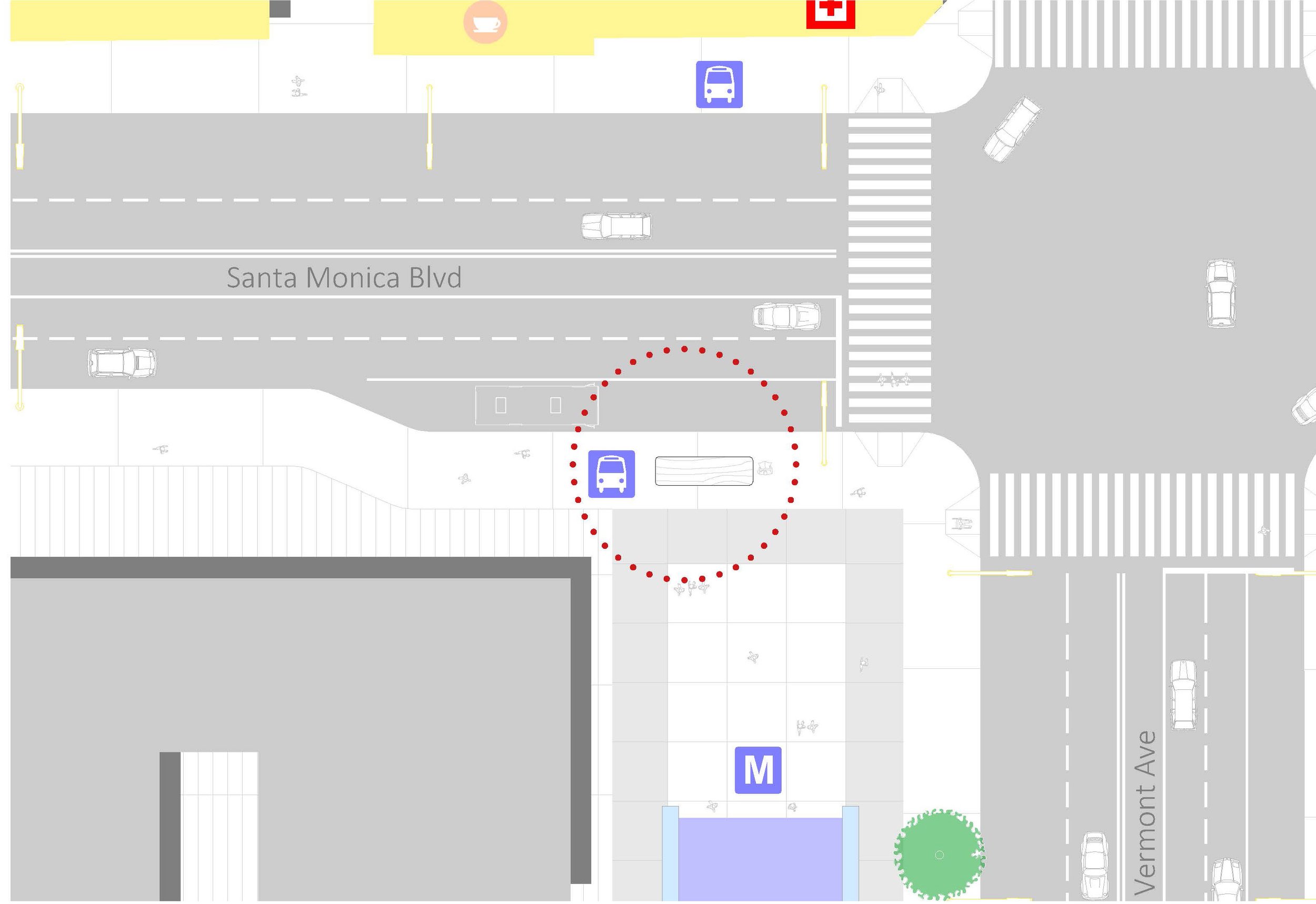
02 ELEVATIONS
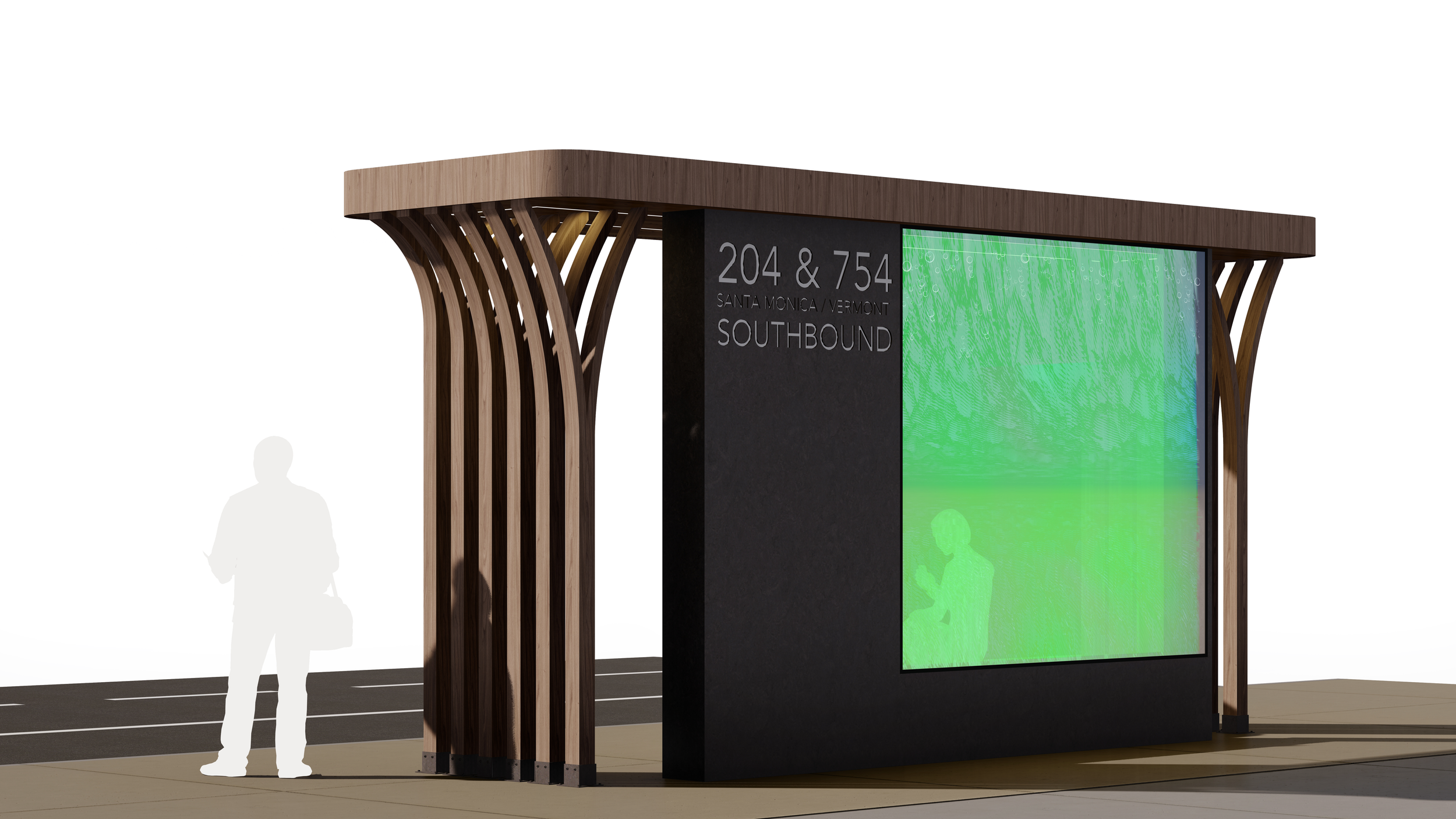
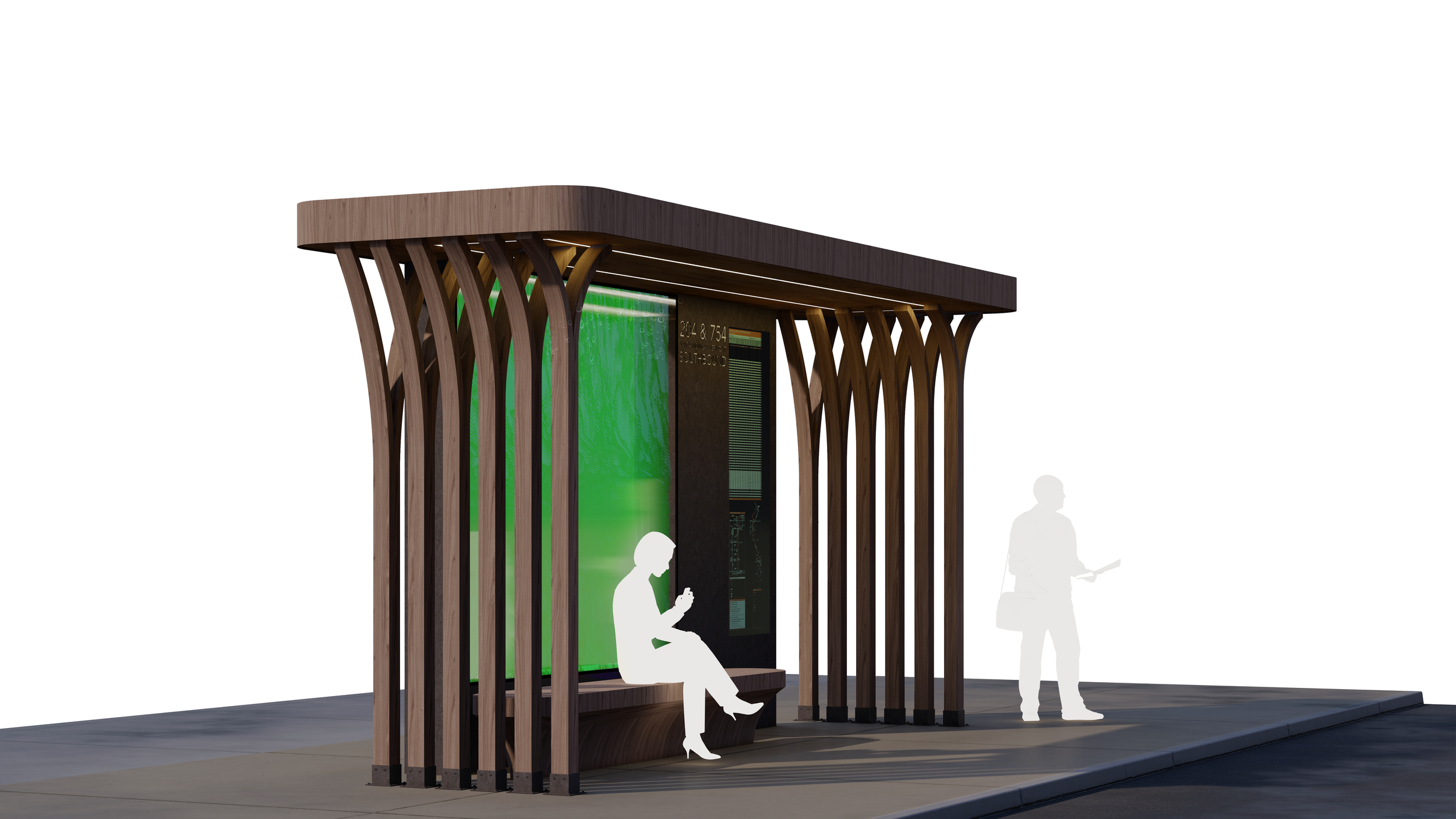
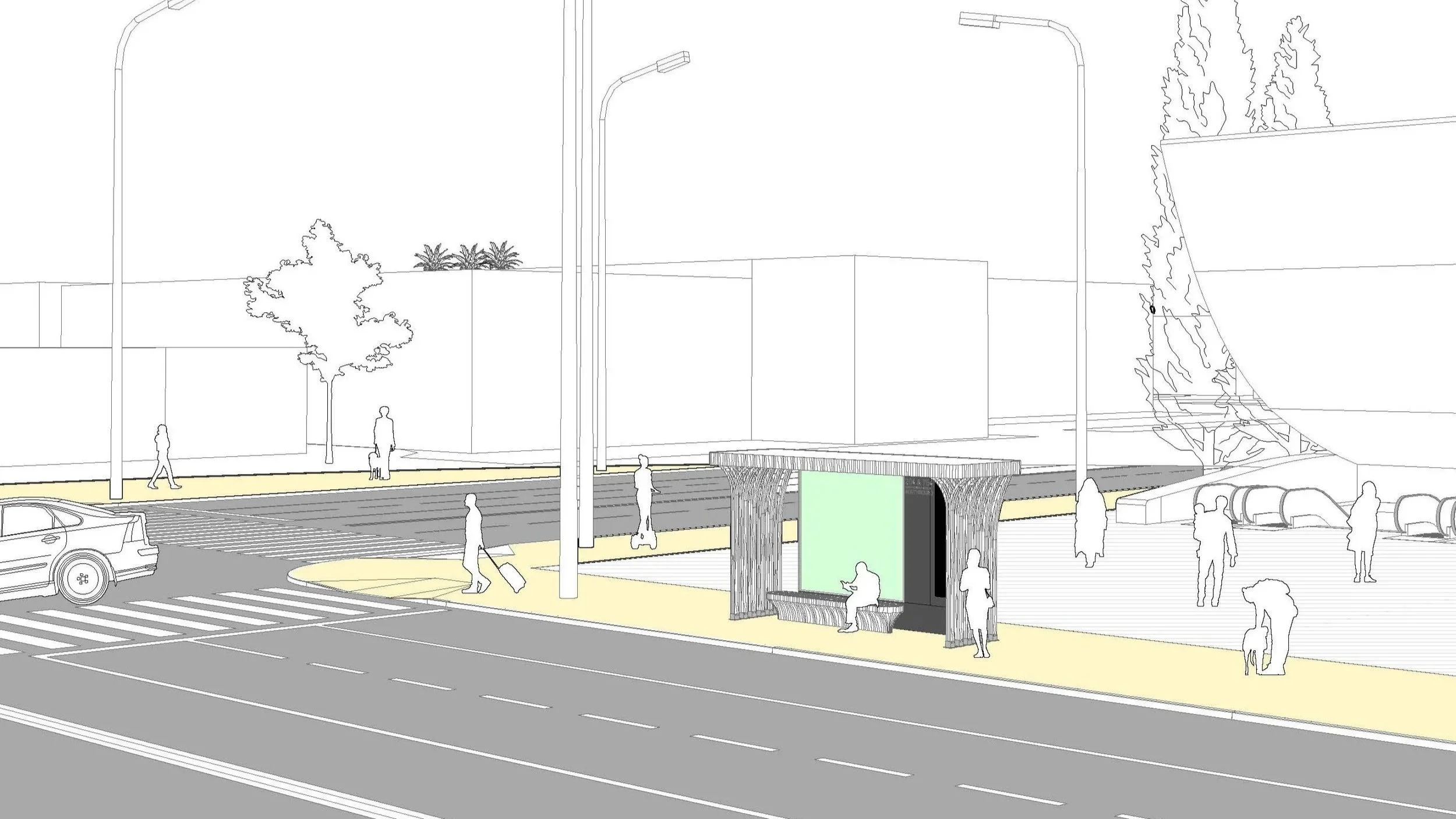
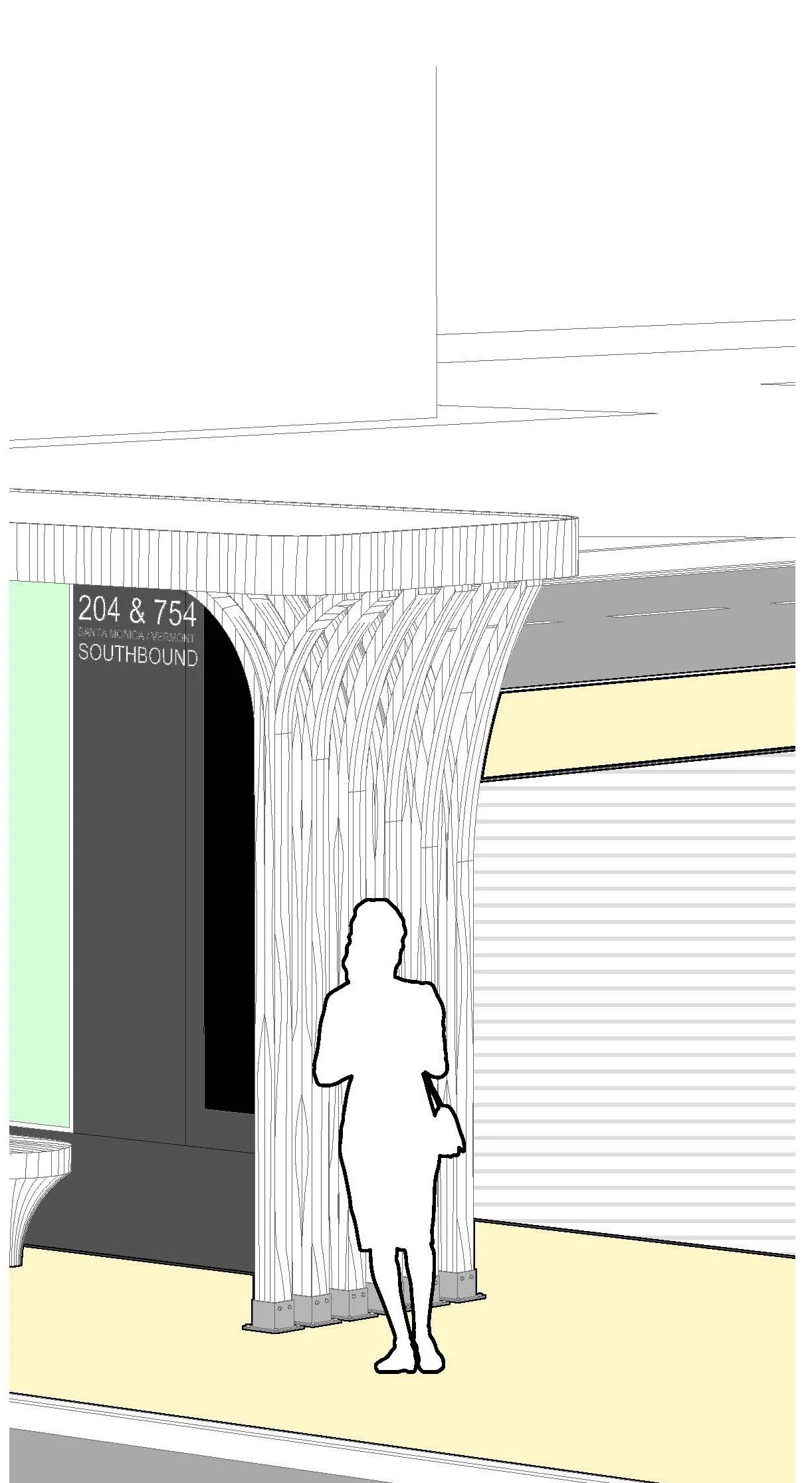
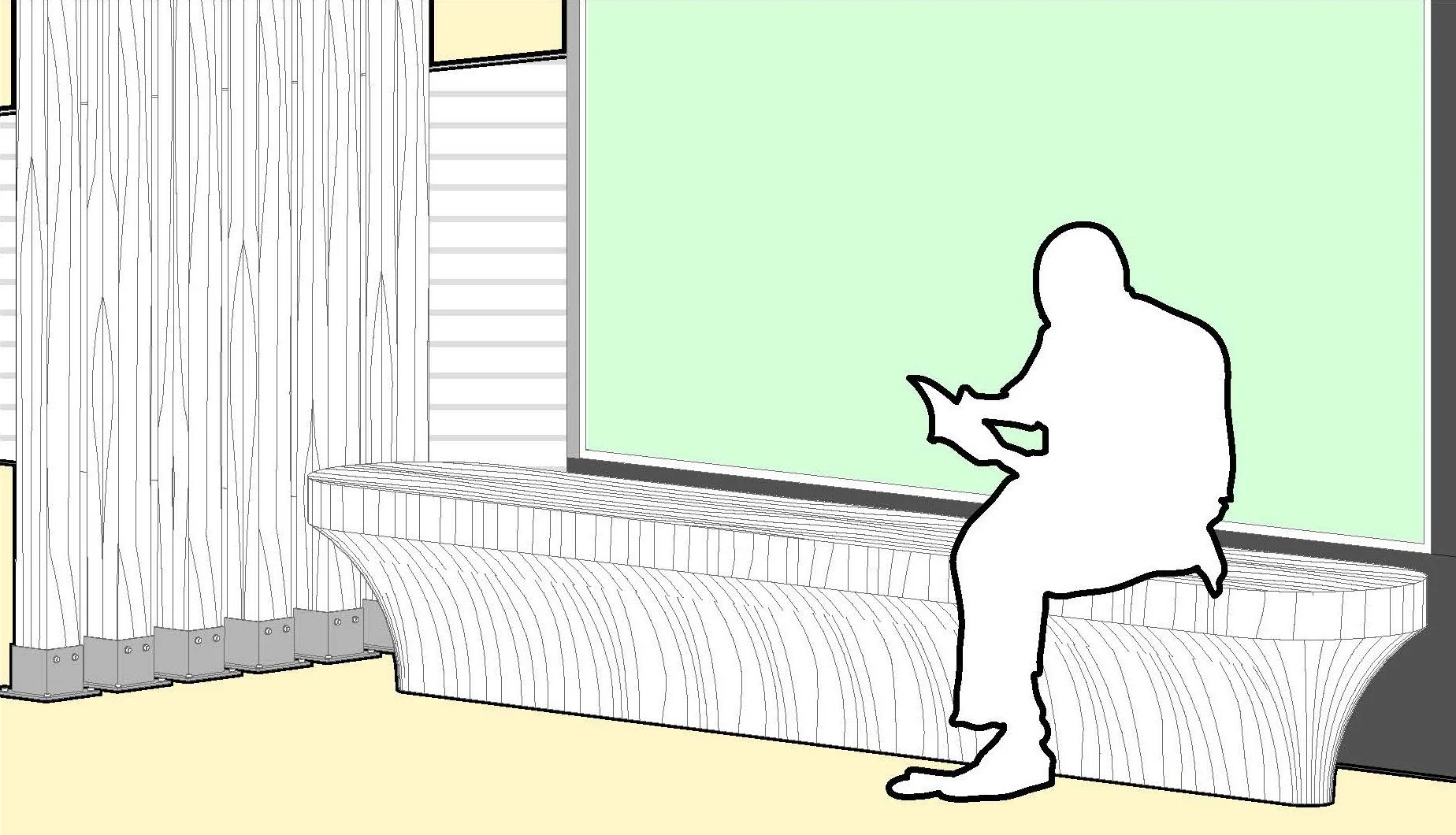
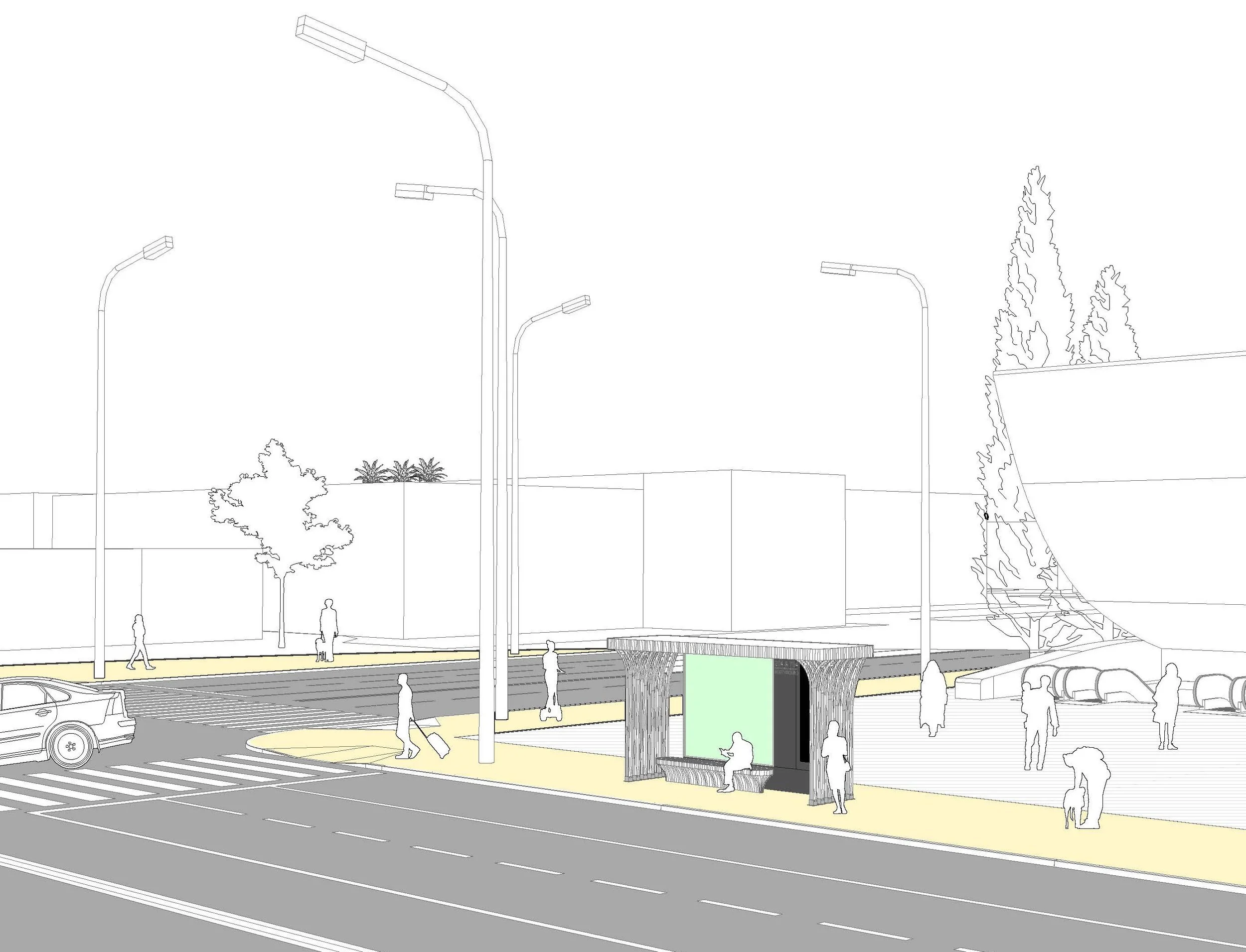
The algae facade is integrated into the existing bus stop footprint. A branching canopy thickens toward the street to increase shade over the waiting zone while keeping clear views for oncoming buses. The rear wall holds a vertical algae panel at eye level, acting as both a solar filter and a visible indicator of the living system. The bench, platform, and canopy dimensions are tuned to maintain accessible clearances, circulation along the sidewalk, and safe visibility at the curb.
Shelter elevations and plan
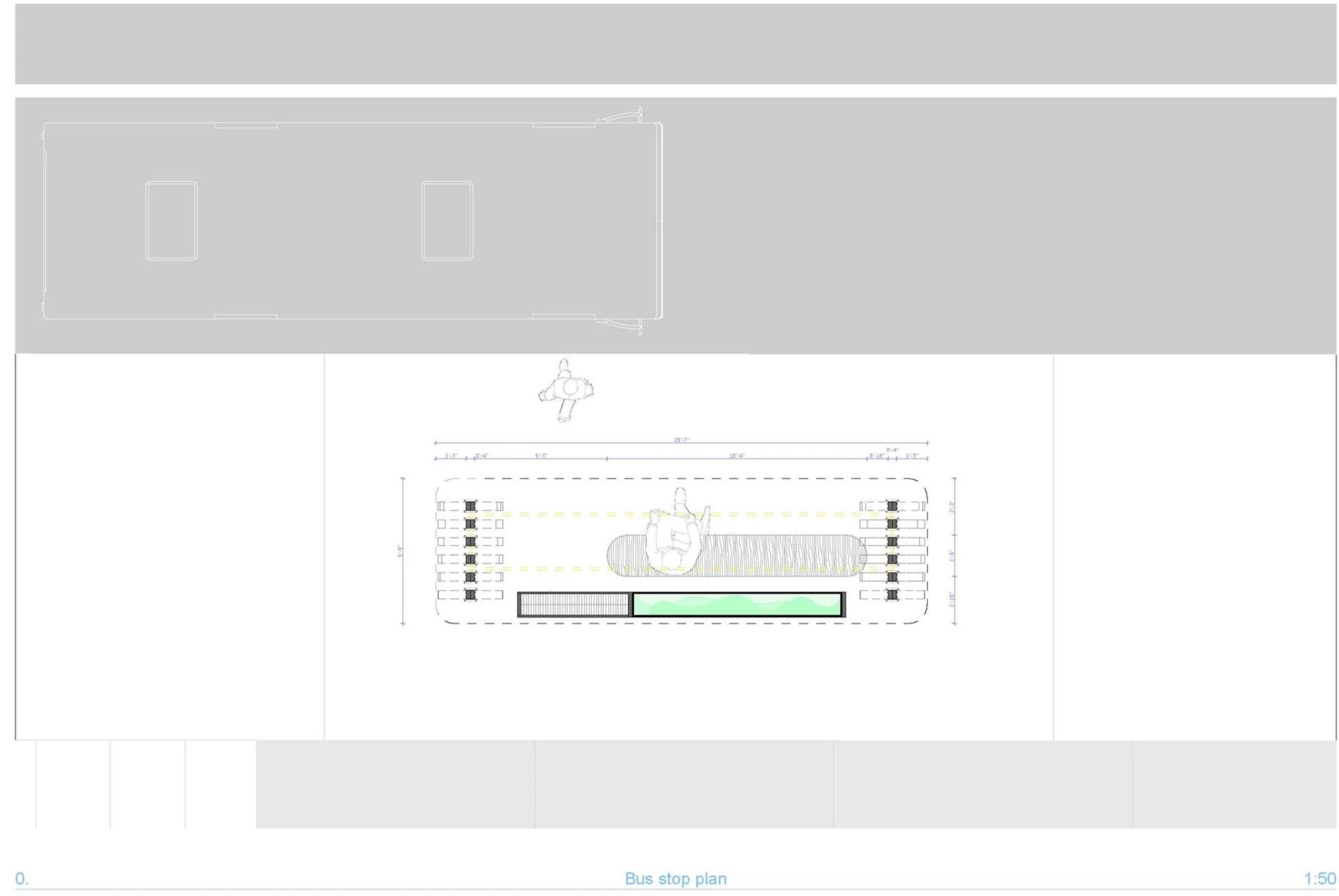
Bus stop plan with canopy and algae facade alignment
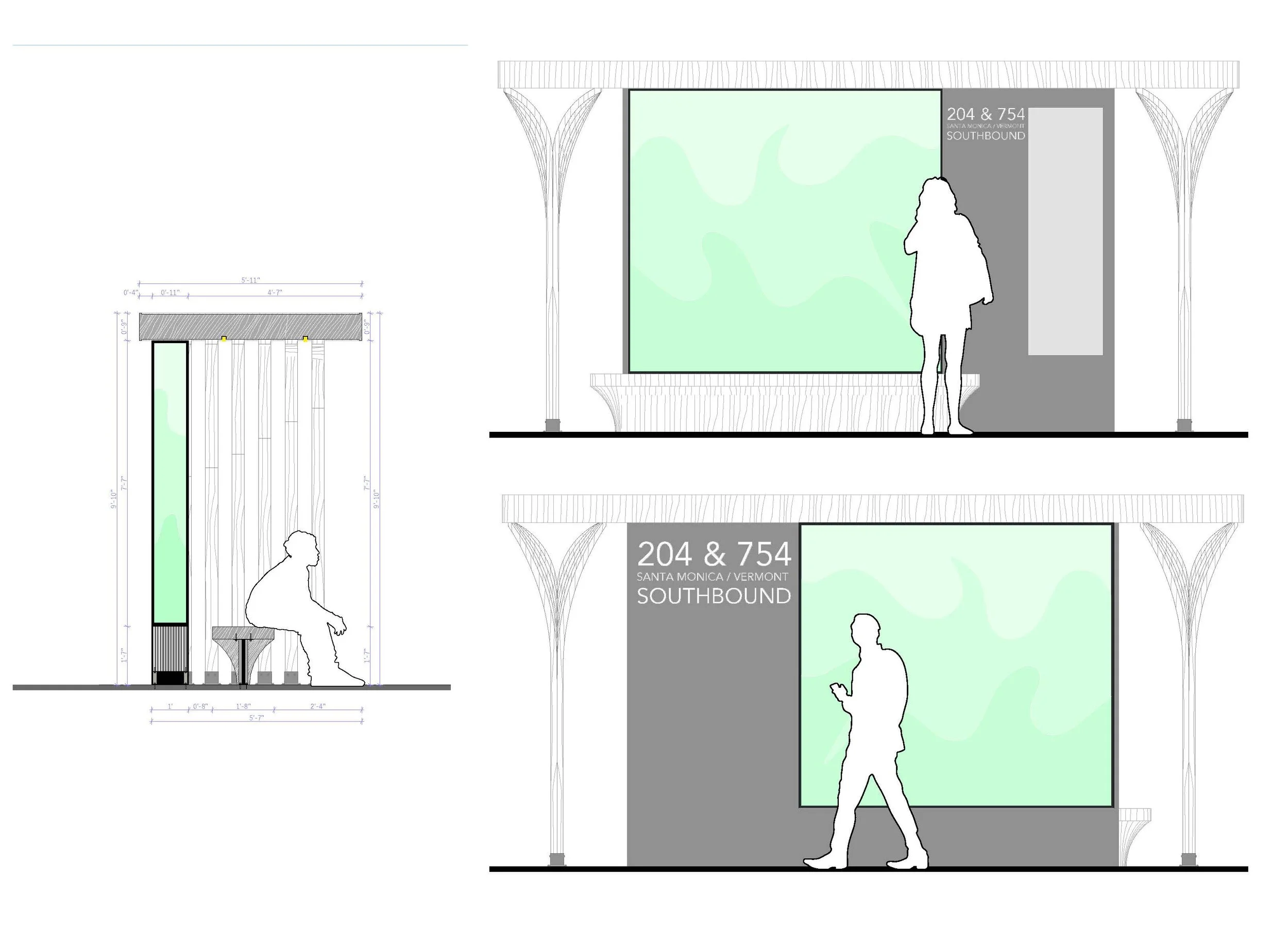
Section and street elevations of bio-integrated shelter
03 DESIGN DEVELOPMENT
Refining spatial experience and material integration
Early sketches examined how passengers interact with the shelter's geometry, including where shade falls, how the algae panel frames the street, and how the seating engages the body. These drawings helped position the living facade and refine the balance between structural form and human comfort.
04 SYSTEM INTEGRATION



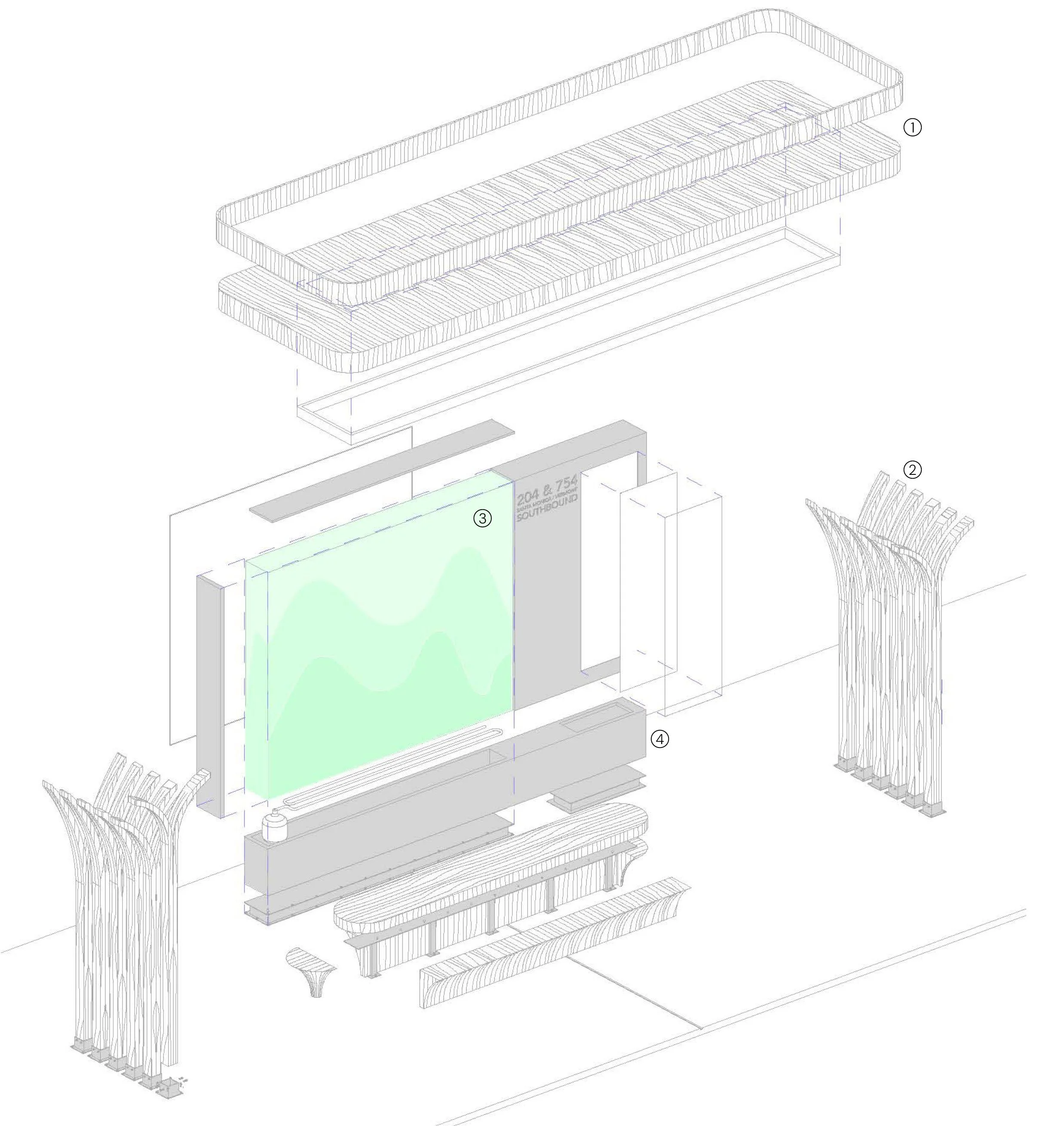
1.Roof A wood-composite top that shades the bioreactor while allowing sufficient light entry.
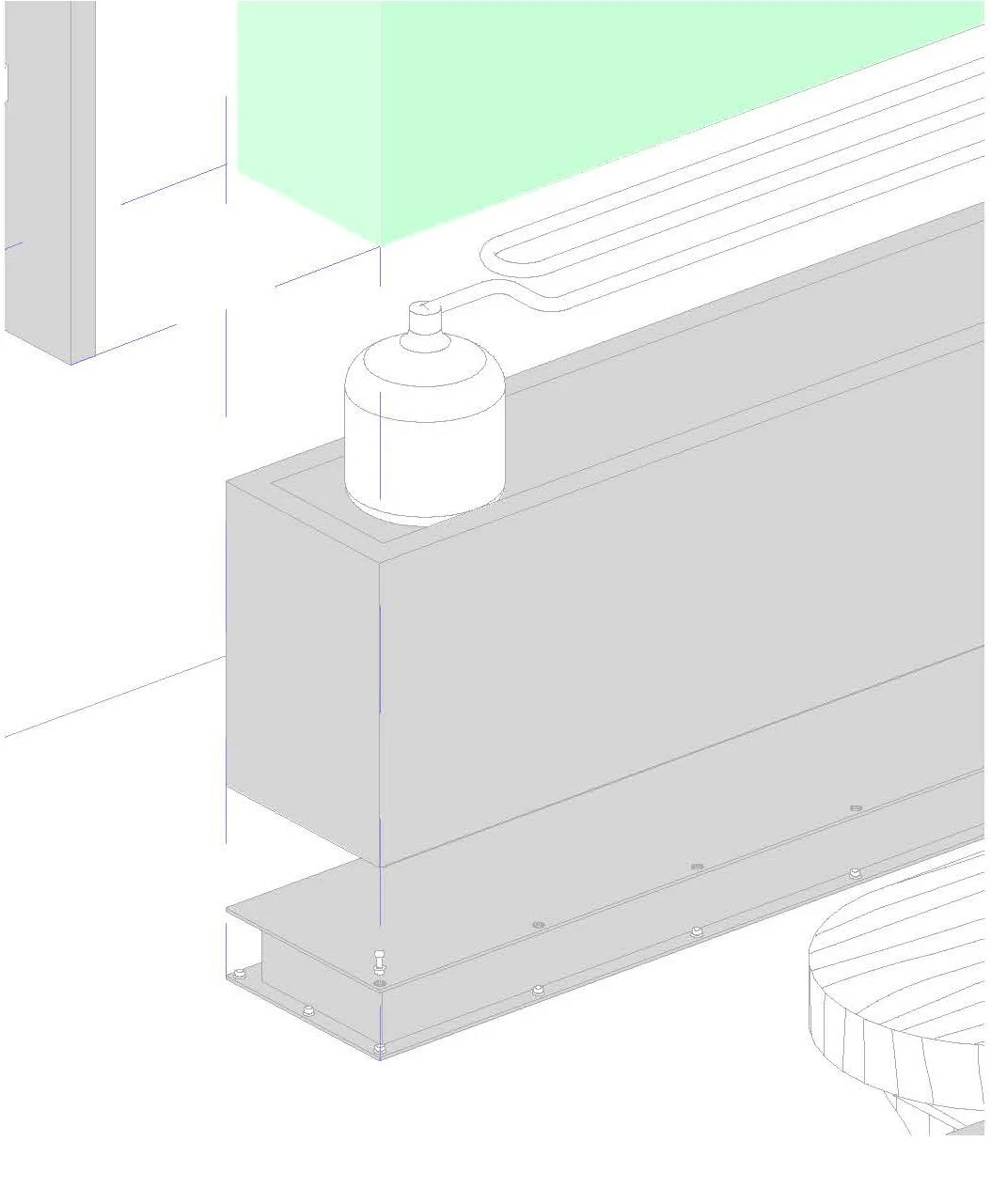
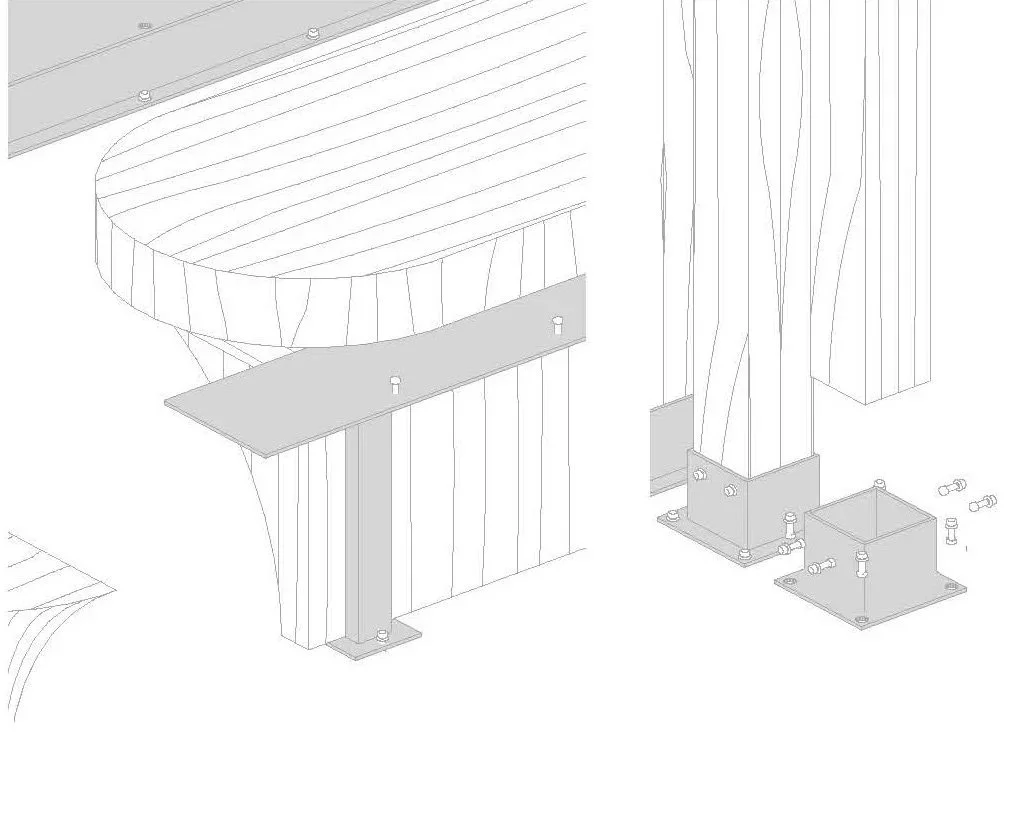
4.Steel base/seating Weather-resistant components that stabilize the structure and anchor the bioreactor frame.
2.Timber ribs Primary shading structure made from a low-carbon material.
3.Bioreactor panel Transparent, durable glass or polycarbonate chamber supporting algae growth and visibility.
Algae bioreactor integration
The facade incorporates a flat-panel algae bioreactor that circulates microalgae through a thin, transparent chamber. As air passes across the surface, the algae absorb CO₂ and release oxygen, creating a visible metabolic interface. The panel’s thickness, internal channels, and circulation rate were calibrated to balance light exposure, structural clarity, and the surface area needed for efficient gas exchange.
The system operates as both an environmental device and an architectural element, providing shade while making the biological activity legible to commuters.
05 MODELS
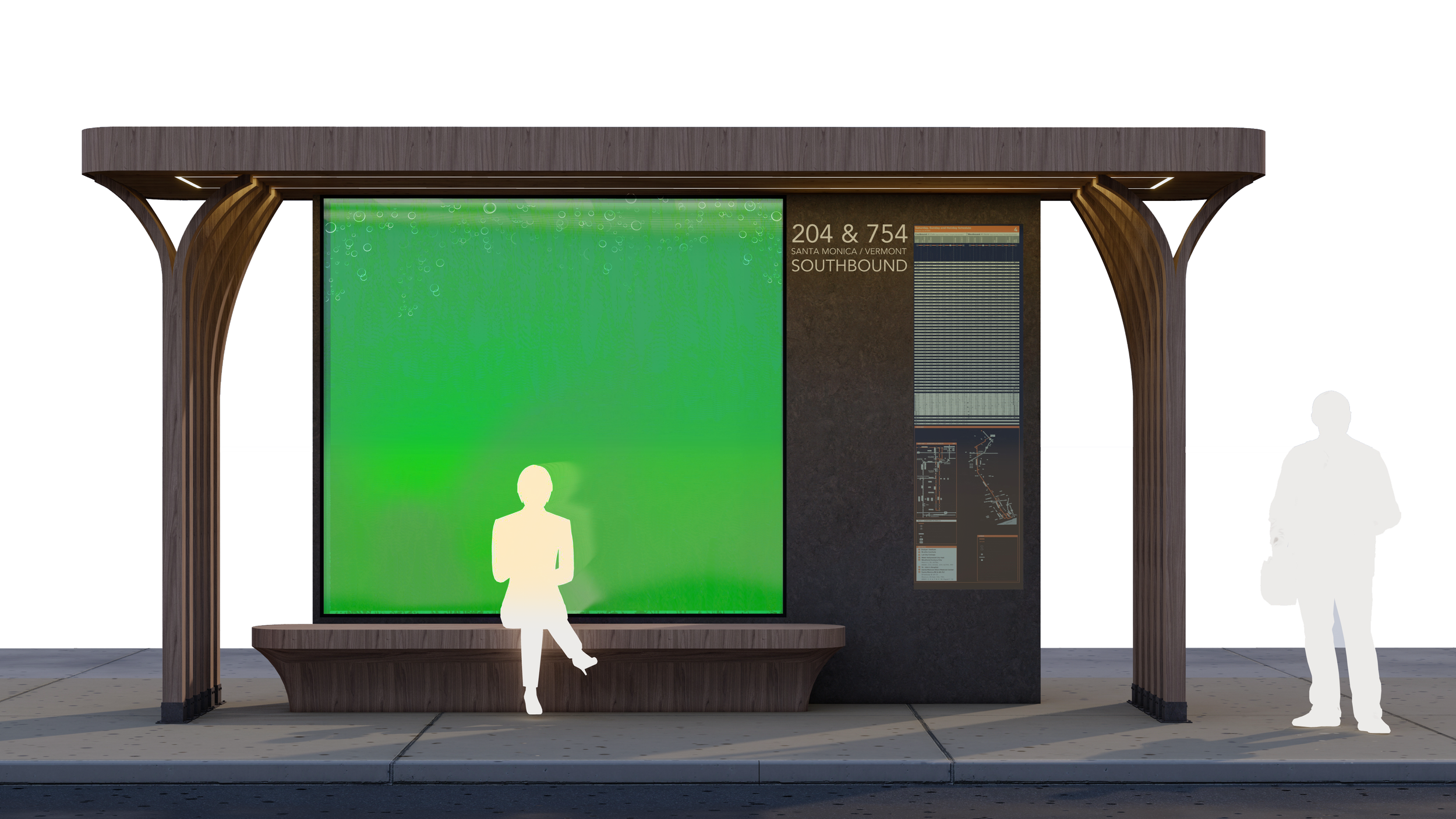
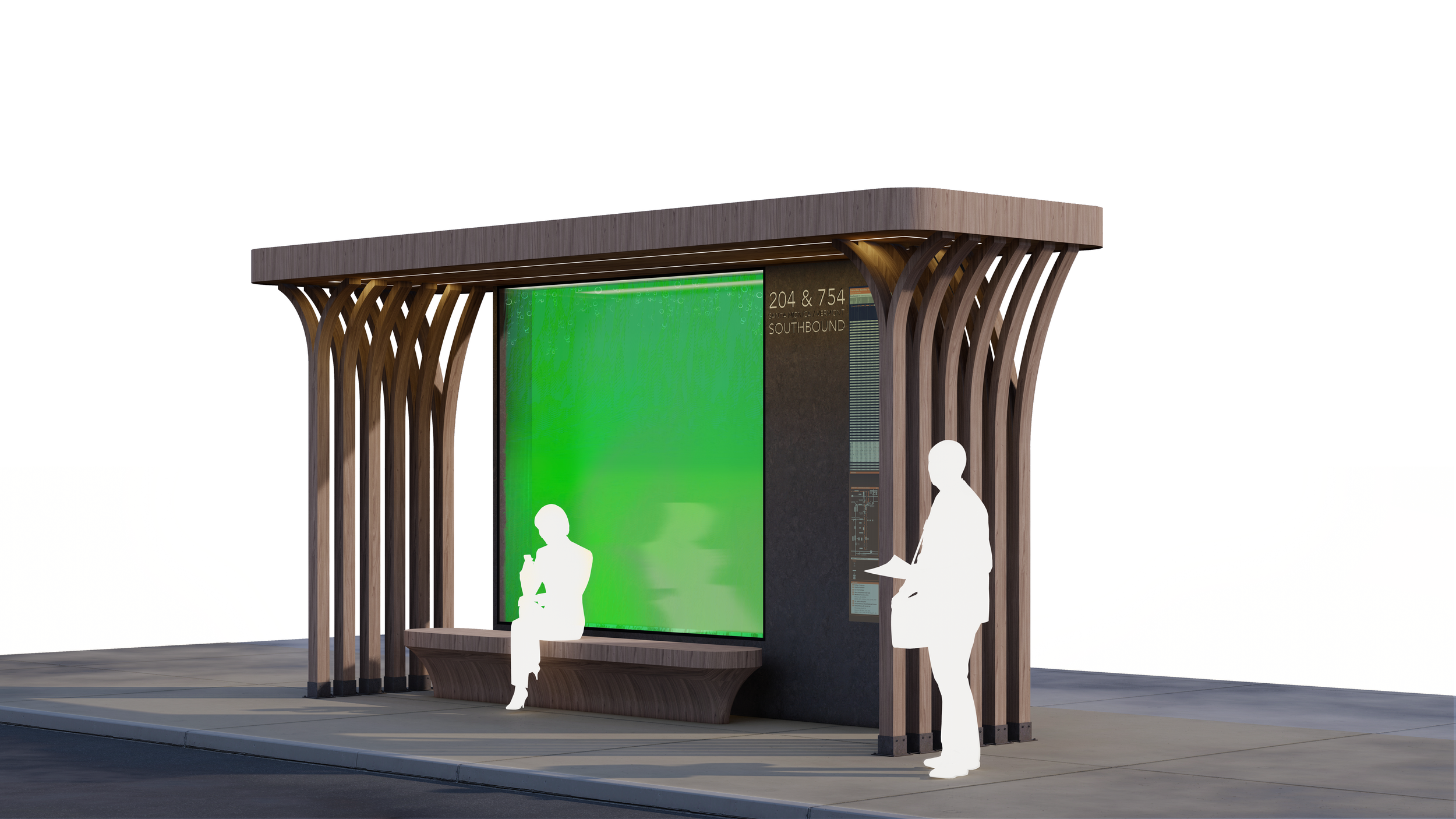
For commuters, the shelter becomes a place to rest, wait, and observe a living system at work rather than endure exposure on the sidewalk. A familiar piece of transit infrastructure is transformed into a shared space where environmental performance and everyday public life are directly connected.
Final proposal
The final design reframes the bus stop as a material-driven, metabolic structure that responds to environmental conditions and the people who use it. The algae bioreactor acts as an active facade that absorbs CO₂, releases oxygen, and makes air quality visible through shifting color and density. Timber ribs shape shade, frame seating, and create a more comfortable microclimate while keeping views open to the street.